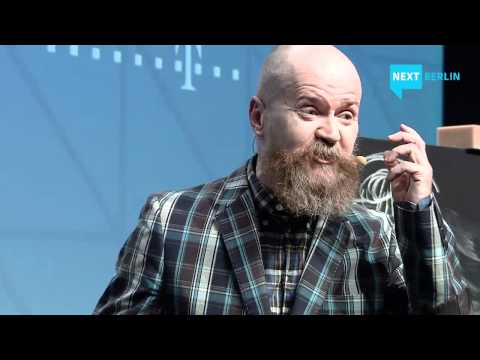
Alexander Bard is an influential cyberphilosopher, music producer, writer, and internationally recognized speaker. His career, spanning over three decades, has led him to stand out in both the worlds of music and philosophy and technology. Bard is known for his provocative theories about the digital age, including the famous trilogy “The Futurica Trilogy,” co-written with Jan Söderqvist, which explores the social, political, and economic implications of the information revolution. He has been a key figure in debates about network society and netocracy, concepts that anticipate a radical change in traditional power structures.
Alexander Bard began his career as a music producer and composer, co-founding Stockholm Records, the largest independent record label in Scandinavia, in 1992. Under his direction, the company achieved global success with bands like The Cardigans and Army of Lovers. In the late ’90s, Bard delved into cyberphilosophy, exploring the social transformations driven by the digital age. His best-known book, The Netocracy, proposes a new dominant class formed by those who control and manipulate information in the network society. He has also been a prominent figure on Swedish television as a judge on the show Idol, and has continued publishing books about the future of humanity in the digital era, such as Syntheism: Creating God in the Internet Age.
He has participated in conferences and workshops at universities such as Stanford, Berkeley, and HEC (Lausanne), where he obtained his Ph.D.
In this talk, Bard explores how information technologies have been the key driver in the development of humanity. From writing to the digital age, he shows how these technologies not only change the way we interact but also the power structures and social dynamics that shape our societies.
Bard presents a revolutionary analysis of how the ruling class of the future will not be based on material wealth but on the control of information. He examines the growing divide between netocrats, who dominate digital networks, and consumtarians, the passive consumers of the information age.
This talk delves into how digital interactivity has transformed our understanding of ethics and morality. Bard suggests that traditional moral rules are no longer sufficient in a hyperconnected world and explores the ethical implications of this new paradigm.
Bard addresses the paradox of the information age: the less information is exploited, the more valuable it becomes. In this talk, he reflects on how companies and organizations can maximize the value of data not through exploitation but through strategic management of its accessibility and use.
If you are looking for a provocative and stimulating lecture on the evolution of society in the digital age and new power structures, you can hire Alexander Bard through Thinking Heads. As one of the most influential minds in the field of cyberphilosophy, Alexander offers a unique vision of how technology is redefining social and economic relationships. Contact Thinking Heads today for more information and secure his participation in your next event.
View profile
Book Speaker
View profile
Book Speaker
View profile
Book Speaker
Contact us
Utilizamos cookies para mejorar tu experiencia en nuestro sitio web. Al usar nuestra web, aceptas el uso de cookies.
Los sitios web almacenan cookies para mejorar la funcionalidad y personalizar tu experiencia. Puedes configurar tus preferencias, pero bloquear algunas cookies puede afectar el rendimiento y los servicios del sitio.
Essential cookies enable basic functions and are necessary for the proper function of the website.
Google reCAPTCHA helps protect websites from spam and abuse by verifying user interactions through challenges.
Google Tag Manager simplifies the management of marketing tags on your website without code changes.
Service URL: thinkingheads.com (opens in a new window)
Statistics cookies collect information anonymously. This information helps us understand how visitors use our website.
Google Analytics is a powerful tool that tracks and analyzes website traffic for informed marketing decisions.
Service URL: policies.google.com (opens in a new window)
Puede encontrar más información en nuestra Cookies policy y en nuestra How we treat your data.