
Over the past few years, the news cycle has been full of updates on international conflicts and wars, climate change, acting as a constant stream of bad news. In January of 2026, the United States launched a military incursion in Venezuela. On February 28, 2026, the United States and Israel conducted a joint military operation in Iran, dismantling its leadership. This conflict specifically raises economic concerns, given the effect on global oil distribution.
Another subject causing unease amongst the public is Artificial Intelligence, and its effect on the job market. Will it create more jobs? Will it take existing jobs away from humans? Reportedly, jobs in fields like software engineering, voice acting, and graphic design are already being replaced by AI. What is the effect on the environment? Generative AI language models are run by data centers which use a large amount of energy- similar to that of a small nation. They create pollution, use massive amounts of water, and poisonous emissions. Can the benefits of this technology outweigh the risk?
And what about climate change? How will this affect our ability to handle any of the issues stated above? 2024 was the hottest year on record, and 2025 was the second hottest. The United States took steps that will increase their climate-warming pollutants, and are no longer in a downward emissions trend. However, the rest of the world is making significant progress in this area. China, responsible for one-third of the world’s climate warming pollutants, is taking significant steps in their clean energy transition. For instance, 90% of the its power capacity in 2025 is made of clean energy sources. Even though climate change is still an issue, it appears that countries are taking significant steps to keep it under control.
→ In our Blog: “Backlash or Transition? The Sustainability Dilemma in the U.S. and Europe”
The current attitude towards world events is quite pessimistic. People are losing faith in their governments, convinced that this level of unrest has never been seen. Uncertainty about businesses, investment, the economy, and the government is also a current talking point amongst many people. However, there is evidence that this is not necessarily an abnormal time in history, and that it is in fact a much safer and peaceful era than previously seen.
The Global Peace Index, something which measures the level of peace in 163 countries based on various factors, shows that the world has become increasingly more peaceful over the last several decades. This is thanks to several factors, one of which being technological advancements- information is quickly spread across the globe, bringing attention to any potential issues or violence. The economy is another reason for continued peace. Many of the world’s economies are intertwined with each other, giving countries an incentive to keep the peace amongst each other. However, these positive facts can be hard to focus on when negative headlines and pessimistic discourse are dominating the public’s attention.
In these times when the perception of the world is so negative, it is worth giving space to ideas that objectively challenge this perception. The below listed speakers specialize in topics such as these, and are experts in related fields.
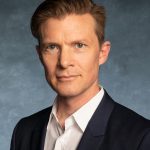
Historian and Social Commentator. Author of “The Story of Human Progress”.
An author of over twenty books, Norberg is known for his insights on freedom, progress, and globalization. In addition to writing, he has worked on several documentaries focused on economics, energy, and global development. He is currently a senior fellow at the Cato Institute in Washington D.C. and the European Centre for International Political Economy in Brussels. Booking Johan Norberg means hearing about global topics in a clear, engaging, insightful way from a dedicated expert.

Professor of Psychology at Harvard, cognitive scientist, and international bestselling author.
With a degree in Experimental Psychology from McGill and a PhD from Harvard, Pinker is one of the most prominent figures in the scientific world. He is the author of thirteen books, many of which have been nominated for a Pulitzer Prize, and has taught at MIT, Stanford, and currently at Harvard. He is a global leader in cognitive science, psychology, and linguistics. Booking Pinker means understanding the world in the context of history and psychology, and how the world may not be as bad as we think.

President & Co-Founder of Gapminder Foundation.
With his experience as a statistician, Rosling works to simplify global statistics to help the public understand global trends and topics, something which he started working towards in 1999 by developing the revolutionary software tool Trendalyzer, which turns statistical data into charts. He continues to work with his company Gapminder in order to make information and educational tools free and accessible for the public. Booking Rosling means discussing the pessimism surrounding the world’s current affairs, and how, according to the data, that pessimism may not be entirely correct.

Co-Founder of Gapminder Foundation
Anna Rosling is a co-founder of the Gapminder Foundation, whose goal is to help combat “devastating ignorance” of the world by transforming hard to understand information into easily digestible, accessible, fact-based pieces. She worked for Google as a Senior Usability Designer from 2007 to 2010 where she worked to improve access to public data and visual data tools, and is currently the Vice President, Head of Design, and user experience at Gapminder, as well as sitting on their board of directors. Booking Rosling means delving into global patterns and inequalities by using easy to understand statistics and real world photos in an engaging format
Society is constantly changing, and it can be overwhelming trying to understand how to navigate all the moving pieces. This is where the experts come in. From evolving social conduct to emerging cultural trends, our Thinking Heads experts offer unique takes that enhance the understanding of diversity and changes in the global society, helping audiences understand how these work, and how to maintain progress in the face of uncertainty

Consulting firm specializing in strategic positioning and influence management of organizations and leaders
